Trauma Informed Yoga Teacher Training
Facilitator: Laurel MacKay
When: September 25 to 27, 2026
Description
This comprehensive training is designed for yoga teachers and wellness professionals dedicated to offering yoga with compassion, sensitivity, and empowerment. While we do not “treat” trauma in a yoga setting, we learn to account for the heightened need for safety and trust. You will gain a guiding framework to understand, recognize, and respond to the effects of trauma, creating a more inclusive and supportive environment for all students.
What You Will Learn
● Foundations of Trauma-Informed Care: Understand core principles and how yoga serves as a tool for regulation and healing.
● The Seat of the Teacher: Explore your “why.” We will examine how your personal teaching style, language, and the use of assists impact the student experience.
● The Nervous System & Trauma: Study the spectrum of trauma through the lens of fight, flight, freeze, and fawn responses. Learn breathwork and mindfulness techniques to help students regulate their autonomic nervous system.
● Creating a Safer Space: Learn to set clear boundaries, use inclusive language, and offer empowering options. You will learn to recognize signs of a trauma response and how to provide co-regulation support.
● Body Awareness & Grounding: Learn methods that support students to reconnect with their physical bodies through choice-based movement experiences..
● Mindful Sequencing: Learn to design sequences that promote agency and offer variations for diverse physical and emotional needs.
● Cultural Sensitivity & Ethics: Discuss cultural humility and the intersections of trauma with race, gender, and identity. Create a personal land acknowledgement and a way to honor the roots of these practices in your teaching.
● Self-Care & Resilience: Develop tools to maintain your own emotional boundaries, avoid burnout, and build resilience while holding space for others.
● Practicum: Integrate your learning through a group teaching experience with constructive, strategic feedback.
Prerequisites: A 200-hour YTT is recommended for those wishing to teach, but the course is open to mental health professionals with a personal yoga practice and an interest in trauma-informed principles.
Certification: Participants receive a 25 hour certificate of completion (including non-contact hours), which may be applied toward continuing education credits with Yoga Alliance.
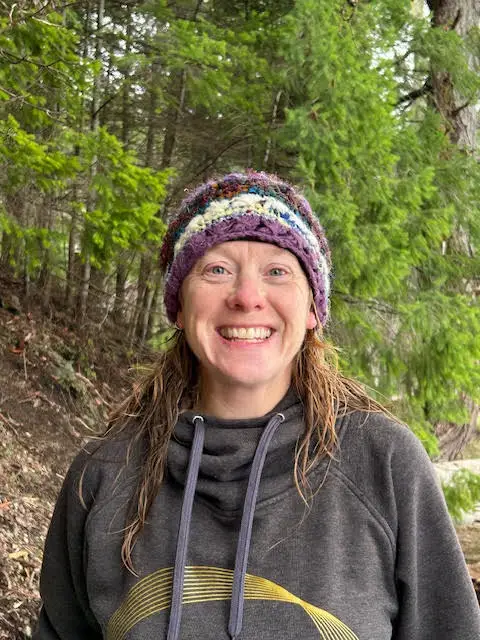
Meet Your Facilitator:
Laurel (she/her)
CCC #7226 | M.Ed. Counselling
Laurel is a Canadian Certified Counsellor with over 25 years of experience in diverse settings, including community mental health programs, schools, the military community, correctional facilities and substance use treatment programs. Her approach is deeply grounded in the complexity of human experience and the systems that influence our wellbeing.
She also teaches yoga and is a sound healing practitioner. Laurel has over 800 hours of yoga and movement based training including Kundalini Yoga, Restorative Yoga, Hatha Yoga, Detour Method, Mindful Strength, Trauma Informed Yoga Facilitation, Personal Strength Training.
Laurel lives and works as an uninvited settler on the unceded, ancestral lands of the Lekwungen Peoples (Esquimalt and Songhees Nations) and recognizes the ongoing impacts of colonialism and the importance of engaging in continual learning, unlearning, and accountability in her personal and professional life.
“I am committed to practising counselling in ways that honour dignity, relationality, and respect, and to ongoing reflection about how power, privilege, and systemic inequities shape experiences of wellbeing and access to care.
As both a counsellor and yoga teacher, I integrate mindfulness and body-based awareness to support psychotherapeutic work. My framework is strengths-based, centering on physical and emotional safety while helping others rebuild a sense of control and empowerment.
I offer trainings and workshops for community members, organizations, and professionals, including:
● Trauma-informed practice and nervous system education
● Embodiment, mindfulness, and resilience-building
● Yoga-based approaches for trauma, grief, and recovery
● Social justice–informed and culturally responsive practice
When I’m not working, you’ll often find me on top of mountains, immersed in forests, in or on the water, spending time with my dogs and my amazing daughters, and continuing my own journey of growth and self-discovery.I am grateful to live and work on the traditional, unceded, stolen territories of the Lək̓ʷəŋən People, known today as the Esquimalt and Songhees Nations. I seek to align myself with the struggle against the systems of oppression that have dispossessed Indigenous People of their lands and denied their rights to self-determination.”
Check back soon for more information.